The News
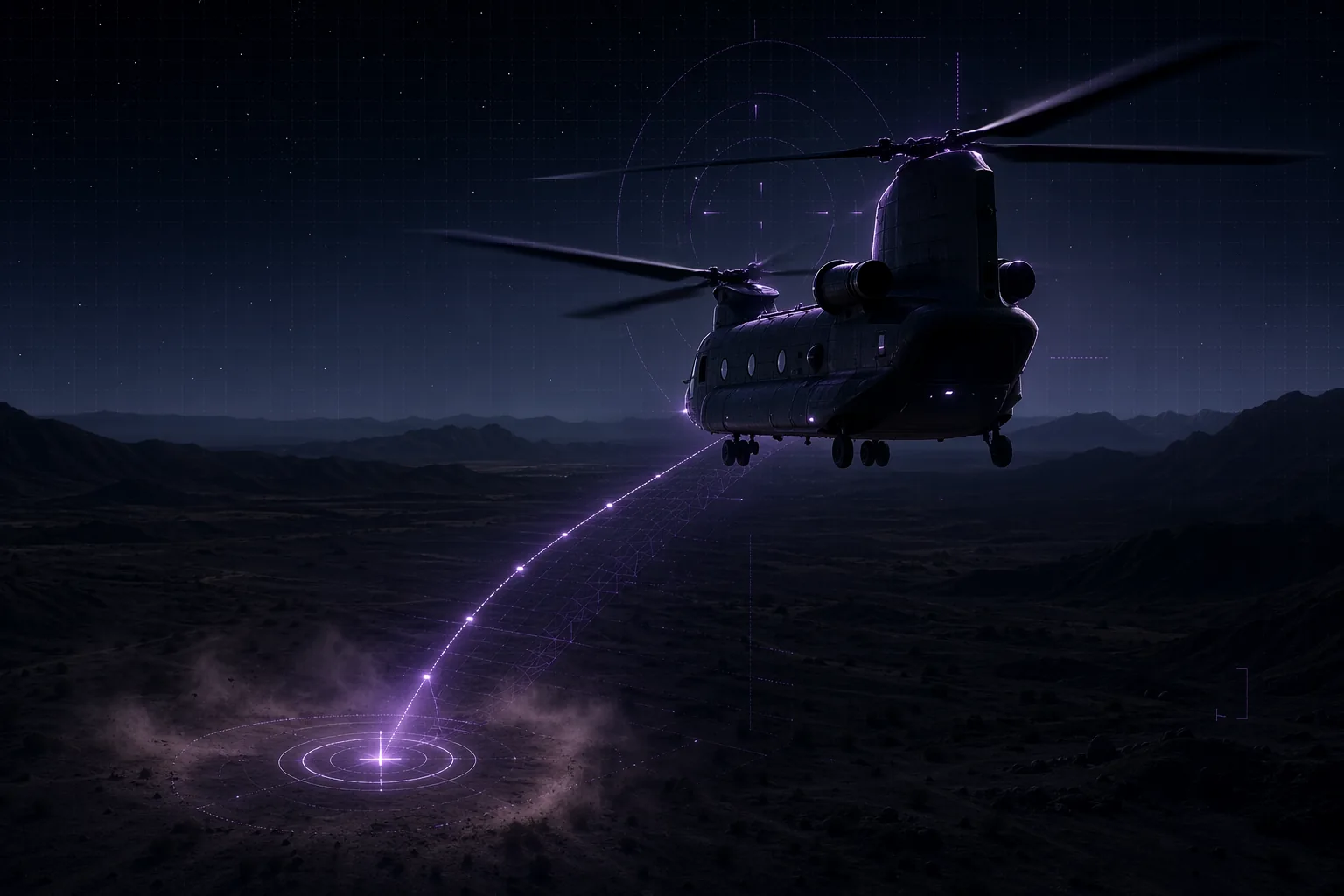
Boeing has landed a CH-47 Chinook without a pilot at the controls. The test, announced in April 2026, used Boeing’s Approach-to-X (A2X) software — an autonomous guidance system that takes over during the final approach and landing phase of flight.
Before takeoff, a human pilot sets the parameters: landing zone, final altitude, approach angle, starting speed. Once those are locked in, A2X flies the aircraft to the touchdown point. Pilots can still override in real time if conditions change. Across more than 150 test approaches — from 100-foot hovers down to the ground — Boeing says the system landed within an average of five feet of its target.
The Chinook has been in Army service since the 1960s, hauling troops, equipment, and cargo in just about every theater the U.S. has operated in. Making it pilot-optional is a big deal. The Army is pushing autonomy across its entire rotorcraft fleet — including pilot-optional Black Hawks — as part of a broader shift toward optionally-crewed aircraft.
Why It Matters
Landing a helicopter is one of the hardest things a pilot does. It takes years of training to handle crosswinds, brownouts from dust, unprepared landing zones, and enemy fire — often all at once. When Boeing’s human factors lead says the goal is to “reduce pilot workload so crews can maintain more eyes-out awareness in a tactical situation,” that’s the real story. The pilot isn’t being replaced. They’re being freed up to do the part of the job that still requires a human brain.
This is the pattern autonomy is following across aerospace. Not “no humans in the cockpit” — “humans doing the work only humans can do, with software handling the mechanical execution.” The same shift is happening with Collaborative Combat Aircraft, autonomous cargo drones, and eVTOL systems. A pilot in 2035 is going to be a mission manager as much as a stick-and-rudder operator.
The signal for students: the people who will win rotorcraft careers in the next decade aren’t pure pilots or pure software engineers. They’re the ones who understand both. The Army isn’t going to stop flying Chinooks — but the Chinooks they fly will look more like airplanes flying themselves, with a human supervising.
Career Connection
If this direction interests you, three AeroEd pathways are directly relevant:
- Pilot — The rotorcraft pilot of the future sets mission parameters, monitors autonomous systems, and steps in when the situation demands it. Still fly — but know what the software is doing.
- Aerospace Engineering — Someone has to build, test, and certify these systems. Flight controls, sensor fusion, and safety-critical software are among the hottest corners of rotorcraft engineering.
- Avionics Technician — Autonomy stacks live on avionics hardware. Installing, troubleshooting, and updating these systems is work that scales with every aircraft in the fleet.