The Story
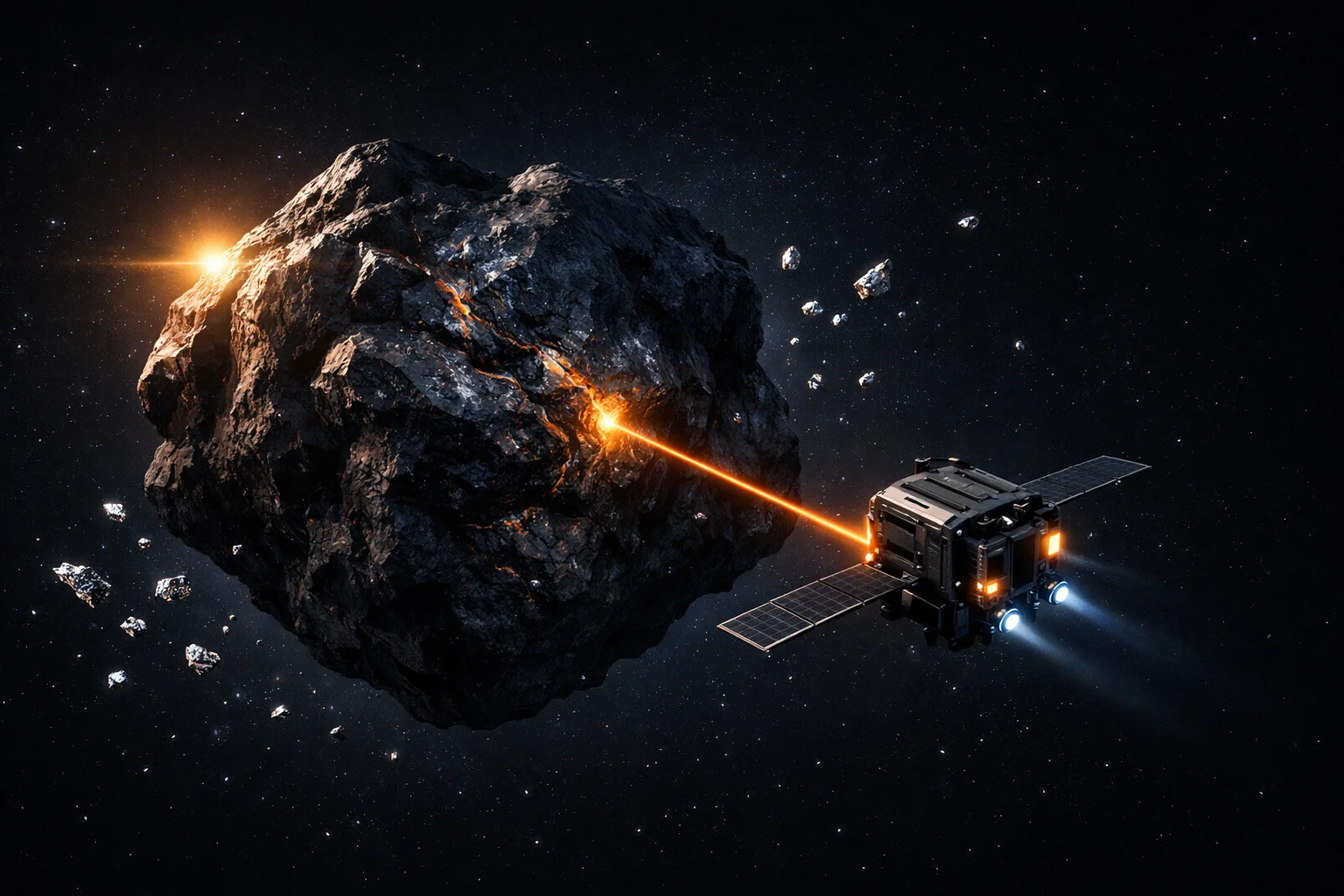
In April 2012, a group of investors that included Google’s Larry Page and Eric Schmidt, filmmaker James Cameron, and former Microsoft executive Charles Simonyi announced a company called Planetary Resources. Their pitch was simple and staggering: they were going to mine asteroids.
The logic, on paper, was compelling. Near-Earth asteroids contain enormous concentrations of platinum-group metals, rare-earth elements, water ice, and nickel-iron — materials that are scarce and expensive on Earth but exist in quantities that dwarf terrestrial reserves. A single 500-meter metallic asteroid could contain more platinum than has ever been mined in human history. Water ice, broken into hydrogen and oxygen through electrolysis, becomes rocket propellant — meaning asteroids could serve as orbital gas stations, fundamentally changing the economics of deep-space travel.
Peter Diamandis, the company’s co-founder and chairman, called it “the biggest business opportunity in history.” Eric Anderson, the co-founder and co-chairman, framed it as the next step in a progression that started with satellite communications and would end with a space-based industrial economy. Within months, a second company — Deep Space Industries, founded by space entrepreneur Rick Tumlinson — entered the race with a similar vision and a smaller budget.
The Technical Plan
Planetary Resources’ approach was methodical. Rather than jumping straight to mining hardware, they planned a phased campaign: first, build low-cost space telescopes to survey and characterize near-Earth asteroids. The Arkyd series of spacecraft — starting with the Arkyd-100 in low Earth orbit and scaling to the Arkyd-300 for deep-space prospecting — would identify the most accessible, resource-rich targets. Only then would mining hardware follow.
The concept of “accessibility” is central to asteroid mining economics. Not all asteroids are reachable — you need targets with low delta-v (the total velocity change required to reach them), which translates directly to fuel cost. The best candidates are near-Earth asteroids in orbits that bring them close to Earth periodically, with delta-v requirements comparable to or lower than reaching the lunar surface. NASA’s catalog of near-Earth objects includes over 30,000 known asteroids, and the population of asteroids with delta-v below 6 km/s — roughly the threshold for practical mining missions — numbers in the hundreds.
Deep Space Industries took a different angle: they focused on the in-space manufacturing side. Rather than returning raw materials to Earth (where launch costs would eat the margin), DSI planned to process asteroid material in space — using it to build structures, fuel spacecraft, and supply orbital manufacturing facilities. Their Harvestor spacecraft was designed to capture small asteroids and return material to a processing facility in Earth orbit. They also developed a microwave-based water extraction system and a 3D printing technology called MicroGravity Foundry that could produce metal parts from asteroid-derived feedstock in microgravity.
The Collapse
Both companies ran into the same wall: the timeline between investment and revenue was measured in decades, and venture capital doesn’t think in decades.
Planetary Resources raised over $50 million, including a $21.1 million Series A led by a fund connected to the Luxembourg government. They built and launched a test satellite, the Arkyd-6, in 2018 — a 6U CubeSat that successfully demonstrated a mid-wave infrared sensor for detecting water on asteroids. It was real hardware doing real science. But the Arkyd-100 prospecting telescope was still years from launch, mining hardware was further still, and revenue from actual resource extraction was somewhere beyond the visible horizon.
In 2018, Planetary Resources was acquired by ConsenSys, a blockchain company founded by Ethereum co-founder Joseph Luhn. The space mining assets were effectively shelved. Deep Space Industries was acquired by Bradford Space in 2019, with the buyer interested primarily in DSI’s propulsion technology — a water-based thruster system called Comet — not its mining ambitions. The asteroid mining vision at both companies was dead.
What Survived
Here’s where the story gets interesting for anyone thinking about careers.
The technology development wasn’t wasted — it scattered into the broader space industry. DSI’s water electrothermal propulsion became a commercial product at Bradford Space. The remote sensing and spectroscopy techniques developed for asteroid prospecting directly informed Earth observation and planetary science missions. The legal and regulatory frameworks that Luxembourg, the United States, and other nations created in response to these companies — particularly the U.S. Commercial Space Launch Competitiveness Act of 2015, which explicitly granted American citizens the right to own resources extracted from space — remain in force and are shaping current policy.
And the science kept advancing. In September 2023, NASA’s OSIRIS-REx mission returned 121.6 grams of material from asteroid Bennu — the largest asteroid sample ever collected. Analysis revealed the sample contained water, carbon compounds, and minerals consistent with the resource predictions that asteroid mining proponents had been making for years. Japan’s Hayabusa2 mission returned samples from asteroid Ryugu in 2020 with similar findings. The geology is confirmed. The resources are there.
A new generation of companies has picked up the thread with more modest capital requirements and nearer-term business plans. AstroForge, founded in 2022 and backed by $13 million in seed funding, launched a refining demonstration payload in 2023 and is planning a deep-space prospecting mission. The Asteroid Mining Corporation in the UK is developing space-rated robotic systems for material extraction. Trans Astronautica Corporation (TransAstra) is building optical mining technology — using concentrated sunlight to heat asteroid material and extract volatiles — under NASA contract.
The difference between the current wave and the 2012 wave is focus. These companies aren’t promising to mine platinum for Earth markets. They’re targeting water ice and volatiles for in-space propellant production — a market that grows with every satellite constellation, every lunar mission, and every deep-space probe that needs to refuel.
Luxembourg’s Bet
One of the most consequential footnotes in this story is a small European country’s decision to become the world’s regulatory hub for space resources. In 2016, Luxembourg’s government launched the SpaceResources.lu initiative, investing €200 million in space mining research and companies — including Planetary Resources and ispace. In 2017, Luxembourg passed a national law giving companies the right to own resources extracted in space, becoming the first European country to do so.
The strategy was deliberate: Luxembourg had already reinvented itself once, from a steel economy to a financial services hub. Space resources were the next transformation. Today, Luxembourg hosts the European Space Resources Innovation Centre (ESRIC), a joint venture with the European Space Agency, and continues to attract space mining startups. The country’s bet hasn’t paid off yet — but it positioned Luxembourg as the de facto European authority on space resource policy, which is exactly the kind of regulatory advantage that compounds over time.
Why It Matters
The asteroid mining story matters to students not because mining will start tomorrow — it won’t — but because it demonstrates how aerospace careers form around problems that take generations to solve. The engineers and scientists who worked at Planetary Resources and Deep Space Industries didn’t waste their careers. They built propulsion systems, remote sensing instruments, spectroscopic analysis tools, and legal frameworks that are now foundational to the broader space economy. The career path wasn’t a straight line from “mine an asteroid” to “profit.” It was a branching tree where every technical capability found applications that the original business plan never anticipated.
The economic logic has also gotten stronger since 2012. Launching mass to orbit is 10-20x cheaper than it was when Planetary Resources was founded, thanks primarily to SpaceX. Satellite constellations are larger and more numerous, creating real demand for in-space servicing and refueling. NASA’s Artemis program needs propellant on the lunar surface. Every one of these developments makes in-space resource utilization — the discipline that asteroid mining companies pioneered — more economically relevant.
The field that asteroid mining created is called In-Situ Resource Utilization, or ISRU. It’s the engineering discipline of using materials found at the destination rather than launching everything from Earth. ISRU is now a funded priority at NASA, ESA, and JAXA. It shows up in lunar surface architecture plans, Mars mission designs, and commercial space station proposals. The career paths it generates — mining engineers who understand vacuum environments, chemical engineers who can process regolith, roboticists who can operate autonomously with 20-minute communication delays — are unusual and growing.
The Career Map
Asteroid mining and ISRU draw from an unusually wide range of engineering and science disciplines:
-
Aerospace Engineering — Spacecraft design for deep-space prospecting missions, low-thrust trajectory optimization for asteroid rendezvous, thermal management for solar concentrators, and structural engineering for microgravity mining equipment. The delta-v calculations that determine which asteroids are economically reachable are pure orbital mechanics.
-
Space Operations — Autonomous spacecraft operations with multi-minute communication delays require sophisticated mission planning, fault management, and decision-making systems. The operators who will manage asteroid prospecting missions need to trust — and understand — the onboard autonomy.
-
Aerospace Manufacturing — In-space manufacturing using asteroid-derived feedstock is the long-term vision: 3D printing structural components, producing propellant from water ice, and processing regolith into construction material. This is manufacturing engineering adapted for vacuum, microgravity, and extreme temperatures.
Additional career paths include planetary geologists and spectroscopists (characterizing asteroid composition from remote sensing data), mining engineers adapting terrestrial extraction techniques for microgravity, space law and policy specialists working on resource rights frameworks, and chemical engineers designing propellant production systems for lunar and asteroid water ice.